


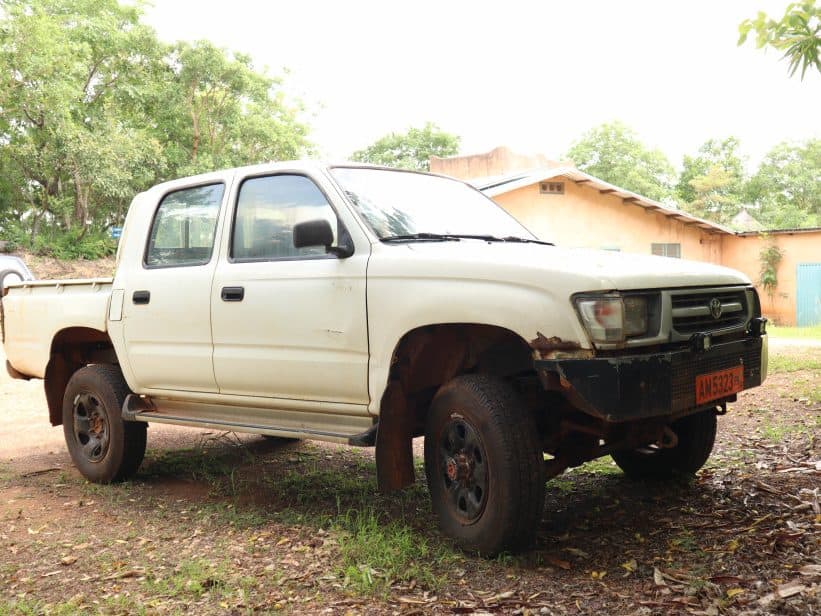
I, along with many others, have experienced the astounding durability of the Toyota Hilux. Next to the heavier Toyota Land Cruiser pickup, I don’t think there is a tougher truck on the planet. Certainly not in Hiluxes weight category, at least.
My Toyota Hilux had already served 10 years in the heat and dust of the Sahara desert before it came into my hands in 2009. It then dutifully carried my family across many rugged miles for the years I served in Benin. Upon leaving, I passed it on to some friends who ran a stonemasonry and construction trades school.
To my utter astonishment, when I visited them a few years ago there she was! My old Luxy was battered and bruised, but she was unbroken. What a beautiful sight she was- a beast of engineering and a true legend!
It’s Not Just Me
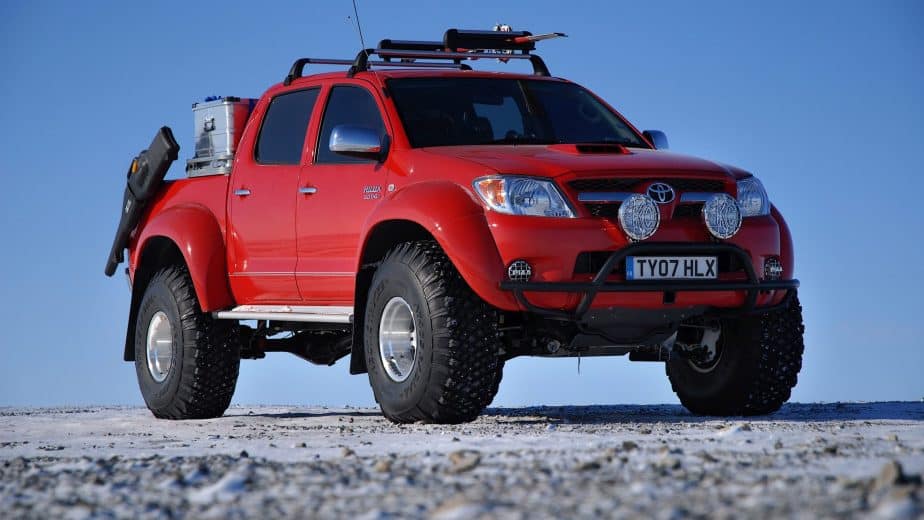
The Toyota Hilux is more than a truck; it’s a reputation. For decades, this workhorse has carried farmers, aid workers, polar explorers, fence-menders and, yes, warlords across every continent.
People don’t call it “indestructible” because it looks cool — they call it that because the Hilux has survived a string of extreme, public tests and has been repeatedly proven in real-world settings where lesser vehicles fail. What follows are the top reasons the Hilux has earned its title — and the facts, tests and expert takes that back it up.
Proven under extreme, public torture tests
The Hilux’s mythic durability was catapulted into global lore by staged, public tests — most famously the Top Gear torture sequence in the early 2000s — where presenters left a Hilux to be battered by the sea, fire, a wrecking ball and even a building demolition.
A few years ago YouTuber, Whistlin Diesel took his Hilux through an equally insane and hilarious series of destruction tests. It’s worth watching too.
While these demonstrations certainly aren’t scientific proof, it does crystallis the reputation that this truck simply keeps running where others don’t.
Simple, proven engineering: Ladder frame and Robust Components

Durability starts in the bones. The Hilux is built on a traditional ladder-frame chassis with heavy-duty suspension options, simple and serviceable drivetrains, and market-specific suspension tunes for heavy-duty use. Toyota documents the Hilux’s multi-decade evolution and design choices that prioritise strength and serviceability — like using tried-and-true suspension architectures and higher-tensile steels where needed. Put bluntly: simplicity = reliability. Fewer fragile systems and easier field repairs mean the Hilux is fixable almost anywhere, often with basic tools and locally available parts.
Global ubiquity = parts, service and Proven Logistics
As a non-profit worker in Africa, I can attest that parts availability was a major factor in choosing the Hilux over competitors. This is a big reason why the Hilux survives decades in remote places. Replacement parts and knowledgeable mechanics exist almost everywhere**.
Toyota’s global production footprint far larger than other manufacturers. That means a spare drive belt, a crate of bearings, or a replacement head gasket is considerably easier to source — particularly in Africa, South America, the Middle East and Southeast Asia where the Hilux has become ubiquitous.
That ubiquity isn’t just anecdotal; Toyota’s global sales and manufacturing spread helped the Hilux become the dominant work truck in regions where logistics are rough and downtime is costly.
Real-world Stress Tested: Conflict Zones and Harsh Industries


Did you know a war was named after these trucks I’m not kidding. Look it up: The Great Toyota War of 1987 between Libya and Chad. Hiluxes and Land Cruisers are well-documented fixtures in conflict zones all around world both in war-fighting and humanitarian relief work.
Even though Toyotas aren’t made for war, the Hiluxes combination of toughness, simplicity and affordability makes it the pragmatic choice for anyone who needs mobility where maintenance is rudimentary.
Seeing scores of Hiluxes operational after years of hard use in war is not an endorsement of the uses, but it is powerful evidence of the longevity of these trucks in the field.
Reputation: “Fixable” beats fancy
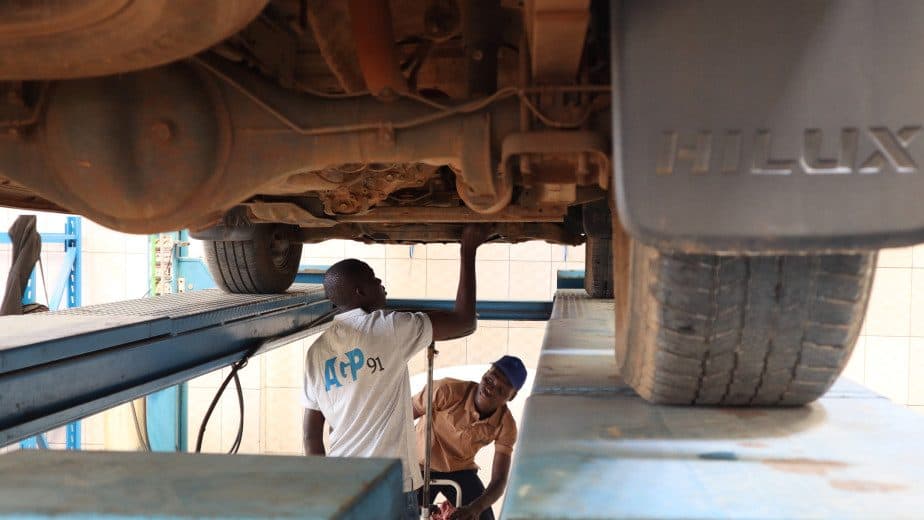
Engineers and mechanics often make the same point: a vehicle that breaks down is only as good as how quickly and cheaply it can be repaired.
Owner forums, long-term ownership writeups and trade reviewers repeatedly emphasise that Hilux faults tend to be straightforward — and parts are inexpensive and plentiful. That means an extended service life even in remote locations, where complexity can be the death of reliability.
Hiluxes routinely rack up 300,000+ km without breaking a sweat. Especially the non-turbo diesel versions.
Conservative engineering choices: Toyota’s low-risk approach to new tech
Car makers often chase headlines with radical new tech; Toyota famously takes a different tack with its work trucks. The Hilux receives iterative upgrades rather than wholesale risk-laden redesigns.
Even the modern Hilux keeps mechanical simplicity as a priority while following Toyota’s tried and true Kaizan system of slow controlled improvements (for instance, Toyota’s recent mild-hybrid 48V option aims for better fuel economy without sacrificing the Hilux’s mechanical durability).
That conservative engineering philosophy reduces early-life failures and the “bleeding-edge” problems that can plague newer, more complex platforms.
Built for payload and duty cycles, not showroom gloss
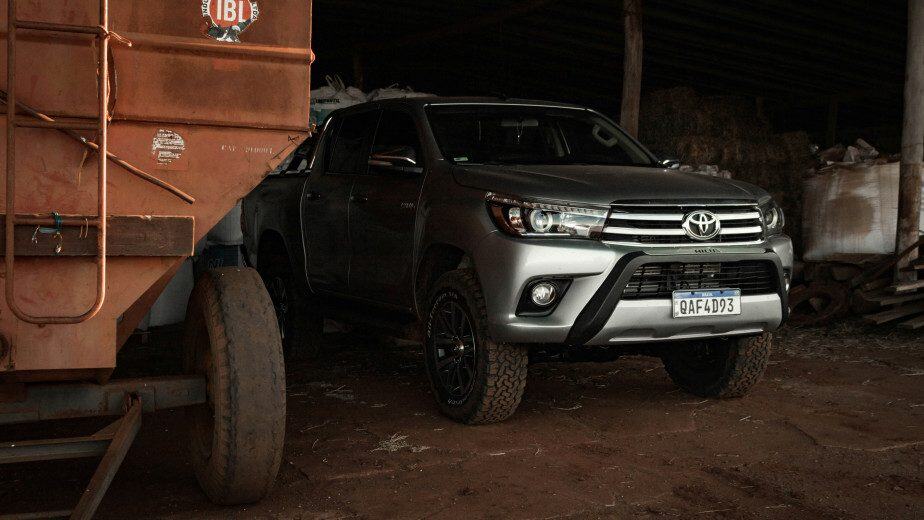
Toyota engineers the Hilux to carry real loads day after day: payloads of around a ton and towing capacity in the multiple-thousand-kilogram range (market and model dependent). Toyota’s Hilux line is engineered with commercial use in mind, so components, thermals and cooling are sized to survive long hours at heavy load. That’s different from a lifestyle-oriented pickup designed for looks: the Hilux’s structural and drivetrain choices are made for hard, repeated work rather than weekend glam.
Longevity and resale: the market rewards durability
Durability makes a lot of economic sense too. Hiluxes often hold strong value on the used market because long-term buyers trust a truck with a track record like these.
That higher resale value reflects real expectations of life left in the vehicle, and it incentivises owners to maintain rather than scrap them. Trade publications and buyer guides repeatedly list the Hilux high on long-term value and used reliability lists — a market confirmation of what torture tests and anecdotes suggest.
But it’s not perfect- There are limits

Whistlin Diesel Hilux Destruction Test 2
The Hilux’s strengths can come with tradeoffs: older Hilux models tend to be underpowered and rough on the road (suspension tuned for load). Cab ergonomics and interior tech have lagged competitors at times, and the same ubiquity that brings parts also means that some used examples have hard lives behind them.
Independent reliability studies show that Toyota as a brand scores well above average — but the market is evolving, and new powertrains and electronics bring more possible failure points.
The point is not perfection; it’s that the Hilux’s design choices deliberately bias toward longevity and reparability, and that bias matters more in the places Hiluxes are expected to work.
Expert takeaways: why engineers and operators prefer the Hilux
Put together, engineers and operators give the Hilux high marks for a few consistent reasons: robust frame and suspension design, conservative powertrain choices, global parts availability, and a history of field-proven performance.
Review outlets that test vehicles in both lab and real conditions reflect this, and field reporting documents the Hilux’s survival not as luck but as outcome of engineering and supply logic. In short: the truck is built to be used, and to be kept in use.
What “most durable” actually means — and why the Hilux earns it
When people call the Hilux “the most durable pickup truck on earth,” they are compressing multiple observations into a single label. Durability, in this case, means: low rates of catastrophic failure, ability to tolerate neglect and rough maintenance, global access to parts and technicians, and a design that values reparability.
The Hilux doesn’t necessarily win every lab test; what it does win is the real-world marathon: decades of continuous service across climates and conflict zones, and a track record of starting and moving under conditions that stop other trucks. That pragmatic, operational durability is what’s truly hard to engineer — and what the Hilux has delivered.
Conclusion
If you need a vehicle that will be maintained in a modern dealer network, is full of convenience tech, and will be used mostly on paved roads, there plenty of other modern pickups that might be a better match. But if your priority is long-term survival, ease of repair, parts availability, and proven field performance, it’s easy to understand why the Hilux’s reputation endures.
For many buyers — from ranchers to NGOs to commercial fleets operating in rough environments — the Hilux’s blend of conservative engineering and global support remains the only rational choice apart from the Land Cruiser 70 series.
Check out this post on Land Cruisers too.
Sources:
- Toyota Global
- Toyota Ireland
- Youtube: TopGear
- Wikipedia
- Youtube WhistlinDiesel
- The Economist
- wbur.org
- Whatcar.com
- J.D. Power
- thecarconnection.com