

There are four primary reasons your LED bulbs keep burning out way too soon:
- Poor Heat Dissipation
- Poor Manufacturing Quality
- Poor Design
- Unstable Power
We will look at permanent solutions to all of the above issues, so stick around.
But firstly, it is important to point out that it is almost always the driver board that burns out, not the actual LED emitters themselves.
Secondly, the most common cases of premature failure are due to bulbs being installed in an enclosed or recessed fixture with inadequate ventilation
What is the Most Durable LED Bulb?
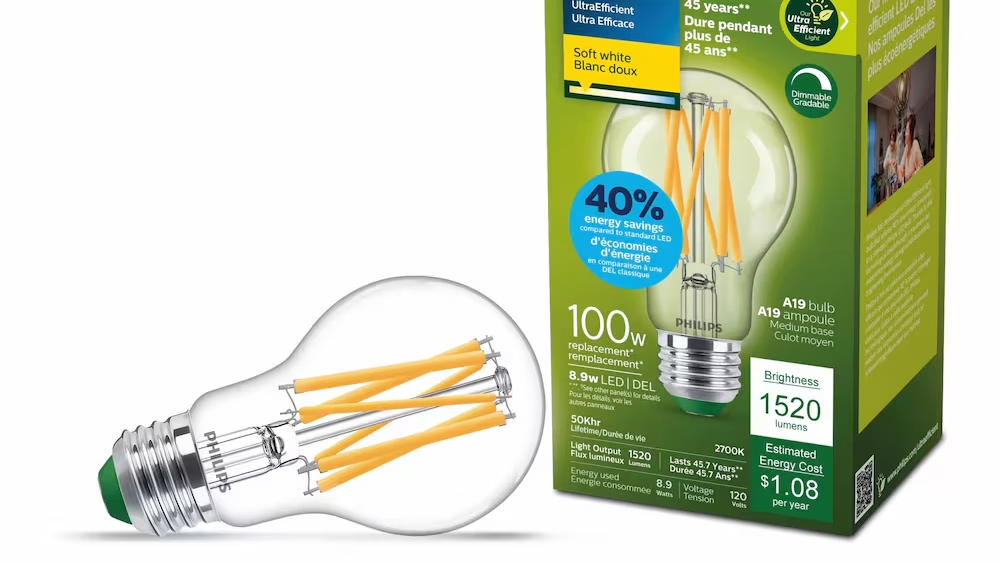
I personally recommend the Philips Ultra Efficiency bulbs(Amazon Link.) They currently stand pretty much in a league of their own in terms of design, efficiency, and durability.
This is due to a combination of key factors:
- 40% less energy consumption compared to regular LED bulbs with the same output.
- Half the heat output– the main factor that kills LED bulbs.
- Filament emitter design- filament emitters are further from base of the bulb where the heat-sensitive electronics are housed
- More filament emitters than typical- this reduces the workload of each emitter, which extends lifespan and increases efficiency.
- Glass globe– much more efficient at dissipating heat than plastic globes.
The Philips Ultra Efficiency Bulbs actually borrow from a much more advanced technology that Philips developed and exclusively sells to the Dubai market. “The Dubai bulb,” as it is called, though expensive, is even more efficient and only uses about 1/4 the energy of regular LED bulbs(For a deep dive of Dubai bulbs watch this video on Youtube)
Philips Ultra Efficiency bulbs do come at a premium, but as is often the case, you get what you pay for. These bulbs cost more because they are actually made better on multiple levels.
MY only gripe with these bulbs? I would like to see more frosted glass options(I did find these ones though -Amazon Link)
1. Poor Heat Dissipation-Enclosed Fixtures and Some Recessed Fixtures
Enclosed fixtures or recessed fixtures with little to no venting will kill LED‘s

While you can get LED bulbs rated for enclosed fixtures I personally don’t put much confidence in those ratings. . Plenty of Reddit contributors have choice words for these so “enclosed fixture” ratings.
An enclosed fixture houses the light bulb within a glass or plastic enclosure that offers little to no airflow. Obviously, this leads to excess heat build up. Also, an upside down bulb within a recessed fixture can die a similar fate because the heat rises and is concentrated right at the base of the bulb where all sensitive LED driver electronics are housed.
The fact is, LED bulbs die quickly in enclosed and partially enclosed fixtures due to the oven-like environment created by heat buildup.
What matters most is to reduce heat by any means possible.
So What are your best solutions?
- Change the fixture: Hate to say it, but sometimes, the permanent solution is just to change the stupid fixture and put an end to the maddening cycle. Next time you update your fixture go with a more open style with plenty of airflow.
- Try a lower wattage- filament style LED bulb. If there are multiple bulbs in the fixture, use 40-watt equivalents rather than 60 watt to reduce the heat output developed in the fixture.
- Use a LED-compatible dimmer switch- LED’s run much cooler when they are throttled back. If you have 60 watt equivalent bulbs use a dimmer to throttle them back to a reasonable yet usable level. You’ll also save electricity while still being able to use full brightness when needed.
2. Poor Manufacturing Quality

Legend has it that the “light bulb cartel” is responsible for the invention of a nasty little thing called “planned obsolescence.” That’s just a nice way of saying, “build it to break sooner, so they’ll come back quicker to buy another one.”
I have a whole article dedicated to that doozy.
Manufacturing quality is the most difficult aspect to judge on LED bulbs unless you are an electrical engineer and take the time to reverse-engineer bulbs like this guy on youtube who does a deep dive on UK version of the Philips Ultra Efficiency bulbs. Your best bet is to stear clear of bargain bin bulbs or at least limit your search to brands with decent longstanding reputations.
Right now, I recommend Philips Ultra Efficiency bulbs(Amazon Link) because they hit the right balance of price and longevity.
LED emitters are generally extremely durable; however, the drive for high profit margins leads manufacturers to cut corners or make “trade-offs” like plastic globes instead of glass, low-quality circuitry, inadequate heat dissipation, and poor internal voltage regulation.
3. Poor Design

This video over on the Hook Up Youtube Channel does an excellent job of hitting many of the points I make below about design features in a durable LED bulb.
1. Efficient Heat Dissipation is Key
Heat is the number one reason LED bulbs burn out too soon, unfortunately most LED bulb designs are built as cheaply as possible and do not prioritize this important aspect in their designs. You may recall that early LED bulb designs came with huge ugly metal heat fins, but they were ugly and costly so companies ditched them. Thankfully, these days you can get aesthetically pleasing designs that also manage heat dissipation quite well.
2. Glass Globe-Not plastic!

Glass LED bulbs can dissipate heat much more efficiently than plastic LED bulbs, this, in turn, extends the life of the circuitry.
3. Filament LED
Filament LEDs use baguette-style LEDs that resemble the filament in antique incandescent bulbs. By contrast, most LED bulbs house their LED emitters in the base of the bulb just on top of a puck-shaped circuit board. This, of course, leads to a transfer of heat right to where it is least wanted: the circuitry board.

Since filament-style LEDs are further from the base circuitry which drastically reduces heat fatigue and extends the service life of the bulb.
If you prefer plain white glass bulbs there are only a few companies like Philips who offer filament LED bulbs with frosted glass but most manufacturers don’t.
4. The More LED Filaments, the Less Stress on Components
Philips Ultra Efficient Bulbs(Amazon link) are rated at 50,000 hours and have twice the efficiency of similar LED bulbs because, among other things, they under-driven the LED emitters which drastically reduces heat and wasted energy.
By contrast, to save on component costs, most LED manufacturers design their bulbs with fewer LED’s emitters but drive them harder. It is a false efficiency that heavily affects the lifespan of an LED light bulb. The trade-off? They are cheaper and the companies make bigger profit margins.
It doesn’t take a genius to understand that overstressing the components naturally results in more concentrated heat fatigue, less efficiency, and a shorter service life.
Life Hack: Use a quality LED dimmer switch to throttle back the output of your lights. Theoretically, at least, this will extend the life of your bulbs by relieving overloaded LED emitters and reducing heat their output.
5. The More Efficient the Bulb, The Longer The Life
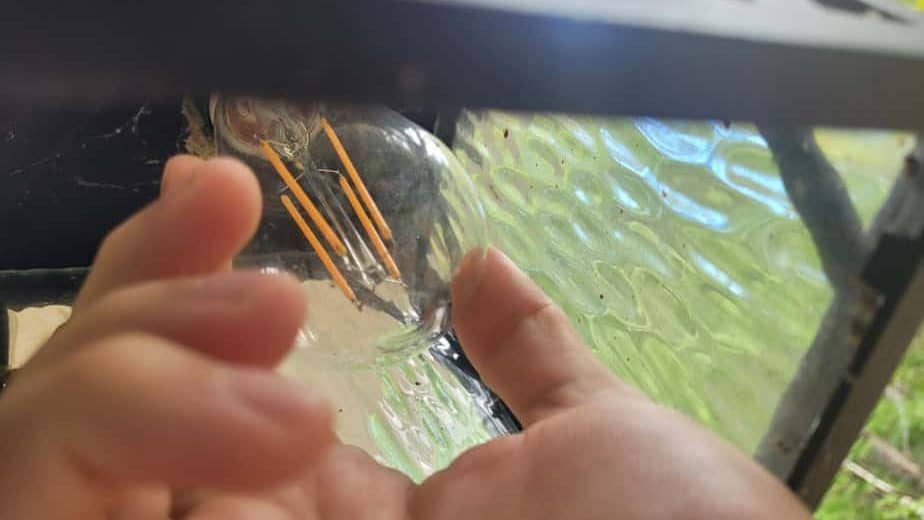
Generally speaking, the more efficient a bulb is, the cooler it runs and the longer it lasts.
LED bulbs are similar to hybrid cars, they last much longer and run more efficiently when they are driven conservatively.
LED emitters in the average bulb are significantly over-driven well beyond specs in order to squeeze out more light from less hardware and cost. The result is earlier burnout.
For example, Philips Dubai bulb I mentioned at the beginning of this article utilizes 8 LED filaments compared to the American version which drives 4 filaments to produce the same amount of light. The Dubai bulb does costs more because of the extra components, but it runs cooler and lasts longer simply because the components are under-stressed.
TIP: Look for LED bulbs that use half as much energy as other LED bulbs for the same lumens of output. This is a good sign that the bulb is constructed with longevity and efficiency in mind. The average 60 watt equivalent LED bulbs use 9 watts, but the equivalent Philips High Efficiency bulb(amazon link) only uses 5 watts.
4. Unstable Power
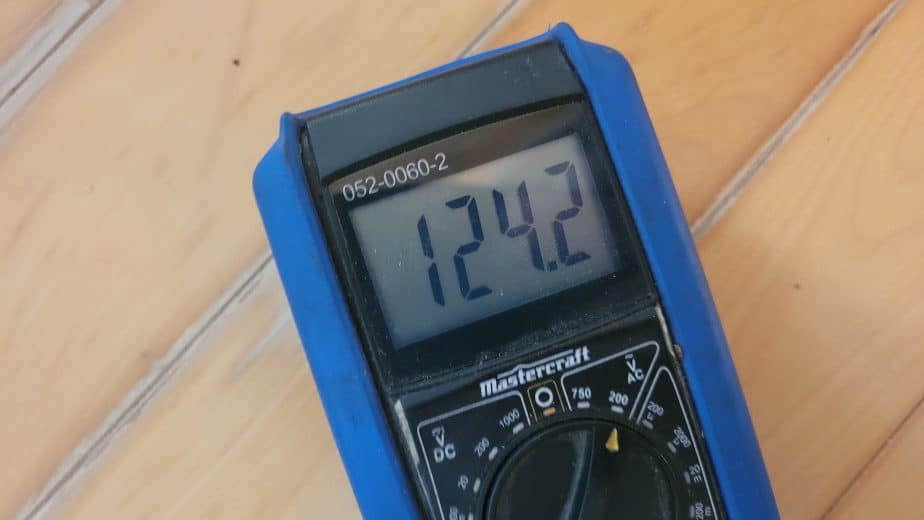
Voltage Instability
This is a rare one, but it’s worth looking into especially if your LED bulbs are flickering or burning out consistently everywhere in your house regardless of the fixture type.
Also, if a single un-enclosed fixture is burning out LED’s at a ridiculously high rate. Use a volt meter to test voltage stability at the bulb socket. Check and secure any loose wire connections and if that does not fix the issue call an electrician because unstable power may be a symptom of a potential fire hazard somewhere in the wiring.
Incompatible Dimmers
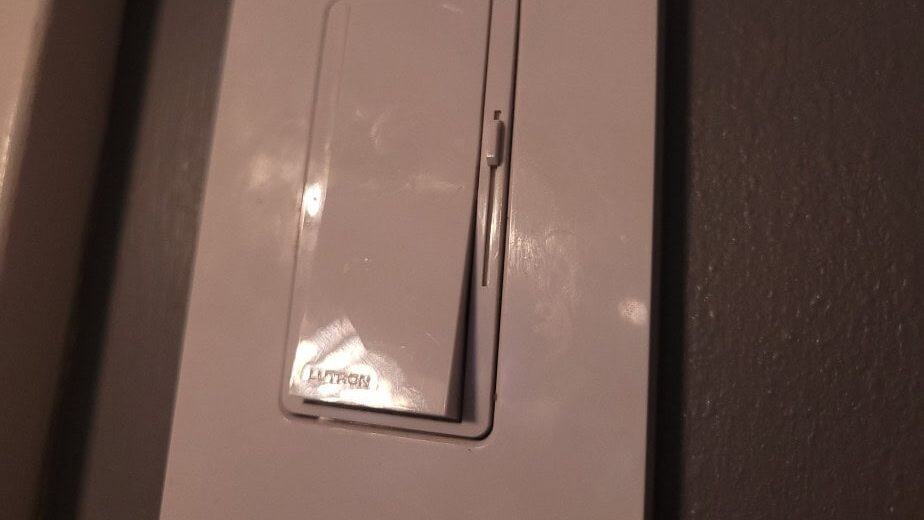
Using dimmable LED bulbs with dimmer switches that were designed for old-style incandescent bulbs will kill your LED bulbs faster than a terrier shakes a rat..well, almost. Incandescent dimmer switches introduce annoying flicker, and offer poor to no dimming functionality at all with LED bulbs.
You don’t need anything fancy. I use these Lutron dimmers(Amazon Link). They are cheap, easy to install and work great.
Conclusion
- Heat is the number one killer of LED bulbs.
- Generally, the higher the efficiency of the bulb(lumens/watt), the less the heat.
- Filament style LEDs develop less heat(clear or frosted)
- Avoid LED’s with plastic globes because they do not dissipate heat as well as glass
- For enclosed fixtures use “enclosed fixture rated” LEDs if possible or install lower wattage, filament LED’s
- Use an LED rated dimmer to “throttle back” your LEDs and extend their life.
- The most durable LED bulbs right now are probably Philips High Efficiency LEDs
- Use a voltmeter to ensure a stable, and adequate voltage at the light socket of problematic fixtures.